
I recently released a small but powerful open-source tool named WhoisThere
There were three main motivations behind building WhoisThere:
- I kept asking LLMs (like Claude, chat GPT, Gemini or others) for domain name ideas. They suggested creative names; only for me to check a domain registrar and find out the domains were already registered
- I wanted to continue working with Go
- I was curious about building an MCP server
What Is WhoisThere?
WhoisThere is an MCP-server (HTTP) written in Go that exposes two “tools”:
- DomainAvailable — checks whether a specific domain (including TLD) is available for registration.
- AvailableDomainTLDFinder — given a domain stem (for example, “
whoisthere“), it checks across a curated list of TLDs (popular, country-code, and newer TLDs) and returns which full domains are available.
These tools let clients (for example, LLM agents) programmatically query domain availability in a structured way. Rather than relying on informal prompts, LLMs can call your MCP server, ask “Is example.com available?”, and get a concrete boolean or list response.
Technical Architecture
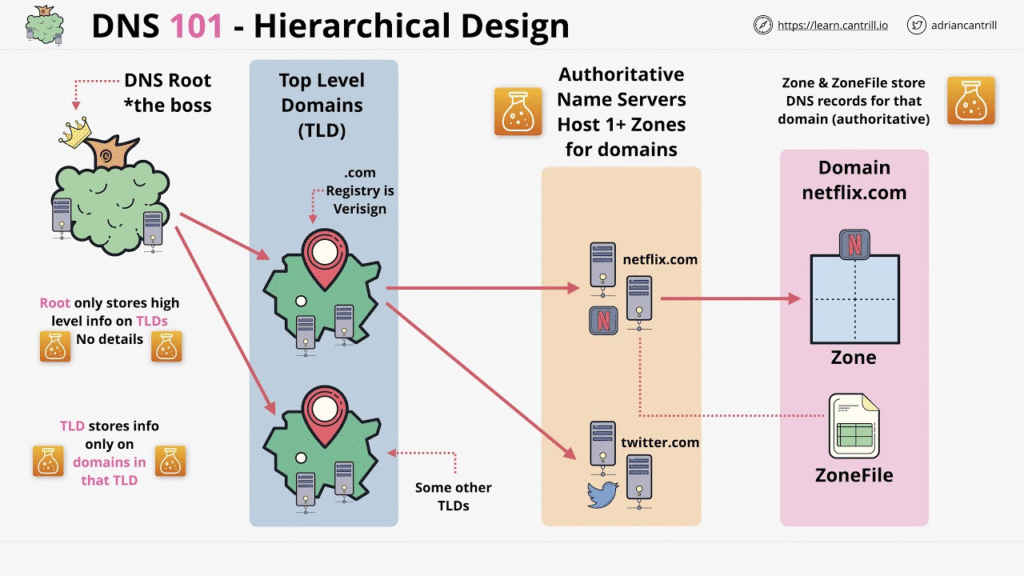
Here are some of the key technical decisions and implementations that made WhoisThere work:
- The service is written in Go, which gives you great concurrency, compilation to a single binary, and efficient performance. This was important because I wanted to make it as lightweight as possible in order to run on resource constrained hardware
- For WHOIS lookups, I used the Go library
likexian/whoisto fetch raw WHOIS data - To interpret the raw WHOIS response, I used
likexian/whois-parser, which provides a structured parsed representation of domain registration data - My logic for determining if a domain is available is layered:
- I check raw WHOIS text for common “not found” patterns (e.g., “no match for”, “not found”, “domain not found”),
- I parse the WHOIS response and check status flags like
expired,pendingdelete, orredemptionperiod, - If there’s an expiration date in the parsed data, I compare it to the current time to see if the domain’s registration has lapsed.
- I maintain lists of TLDs that I will check for the TLD-finder tool:
- Popular TLDs:
com,net,org,io,dev,app,co, etc. - Country-code TLDs:
us,uk,ca,de,jp, and more. - Newer TLDs:
ai,xyz,blog,shop,online, and others.
- Popular TLDs:
Because WHOIS lookups are done concurrently (in Go routines), the server can handle multiple checks in parallel fairly efficiently.
Building the MCP Server
To expose these domain-checking tools, I used the Go MCP SDK
Creating an MCP server was pretty straight forward:
	server := mcp.NewServer(
		&mcp.Implementation{Name: "whoisthere", Version: "v1.0.0"},
		&mcp.ServerOptions{
			HasTools: true,
		},
	)

	mcp.AddTool(
		server,
		&mcp.Tool{Name: "DomainAvailable", Description: "Check if a domain is available"},
		CheckDomainAvailability,
	)
	mcp.AddTool(
		server,
		&mcp.Tool{
			Name:        "AvailableDomainTLDFinder",
			Description: "Given a string without a TLD, find all available TLDs for a potential domain",
		},
		CheckAvailableDomainTLD,
	)

	handler := mcp.NewStreamableHTTPHandler(func(req *http.Request) *mcp.Server {
		return server
}, nil)Transport-wise, I opted for HTTP (rather than STDIO or other transports). This makes it easy to call from LLM agents, local clients, or even web front ends.
Deployment & Usage
I built WhoisThere to be lightweight:
- It compiles into a single Go binary for all architectures.
- I currently run it on my proxmox homelab to serve my LLM toolchain (LM Studio / Claude Desktop/ N8N).
- No heavy external dependencies: unlike a full database-backed web service, it’s just Go + WHOIS libs.
Lessons Learned & Challenges
Working on WhoisThere was a rich learning experience. Here are some of the highlights:
Learning Go
- Go’s concurrency model made handling parallel WHOIS lookups straightforward and reliable.
- Parsing and error handling in Go forced me to think carefully about edge cases (e.g., what happens when WHOIS data is malformed or missing).
- The syntax reminded me of both Python/javascript (for readability) and C++ (for performance), which felt familiar and comfortable.
Learning MCP
- Using the official Go MCP SDK helped me understand how to define “tools” with strongly typed input/output schemas
- I gained a better grasp of how an LLM can call external “tools” via MCP, which is increasingly useful in agent-based architectures.
- Handling the HTTP transport and tool registration felt very easy with a simple
mcp.NewStreamableHTTPHandlerpaired withhttp.ListenAndServe(config.Host, handler)
Technical Challenges
- WHOIS responses are notoriously inconsistent. Different registrars and TLDs have different formats, so catching “domain not found” reliably meant combining raw-text pattern matching and structured parsing
- Error handling: if parsing fails, or the WHOIS client errors, I currently return an error via MCP
Technical Challenges
WhoisThere may be a small tool, but it’s been a meaningful side project: a practical tool, a learning exercise, and a foundation for future experimentation with both LLMs and MCP tooling.
If you’re interested in trying it out, contributing, or just seeing how it works: check out the GitHub repo. I’d also love to hear feedback, ideas for improvement, or real-world use cases you think could make it even more useful.
Leave a Reply